Cash Flow in Personal Finance: What It Is, How It Works, and How to Improve It
Understanding cash flow is one of the most important parts of managing your personal finances. Learn what cash flow means, how to calculate personal cash flow, the difference between positive and negative cash flow, how income and expenses affect your money, and practical ways to improve your monthly cash flow.

- What Is Cash Flow in Personal Finance?
- Why Cash Flow Matters
- How to Calculate Personal Cash Flow
- Positive vs. Negative Cash Flow
- How Income Affects Cash Flow
- How Expenses Affect Cash Flow
- Fixed and Variable Expenses
- Cash Flow vs. a Budget
- Monthly Cash Flow Example
- How to Improve Your Cash Flow
- Common Cash Flow Problems
- Cash Flow With Irregular Income
- Managing Irregular Expenses
- Emergency Savings and Cash Flow
- Debt and Personal Cash Flow
- Habits for Better Cash Flow
- How to Create a Personal Cash Flow Plan
- Frequently Asked Questions
Cash flow in personal finance is the movement of money into and out of your finances over a specific period, such as a week, month or year. In simple terms, it compares the money you receive with the money you spend or allocate. Understanding this movement can help you determine whether your current financial situation is sustainable and where changes may be necessary.
Many people think that managing money is simply about earning enough income. Income is certainly important, but your income does not tell the complete story of your financial position.
Two people can earn the same amount of money and have completely different financial situations because they have different housing costs, debt payments, transportation costs, family responsibilities, savings habits and spending patterns.
This is where cash flow becomes important. Cash flow helps you look at what actually happens to your money after it enters your financial life.
If more money is coming in than going out, you generally have positive cash flow. If more money is going out than coming in, you have negative cash flow. The difference may appear simple, but understanding why it happens can provide valuable insight into your personal finances.
A healthy cash-flow system gives you enough control over the timing and use of your money to cover current obligations while also making progress toward future financial goals.
What Is Cash Flow in Personal Finance?
Cash flow is the net movement of money into and out of your finances during a particular period.
Money coming into your finances can include employment income, self-employment income, business income, commissions, rental income, interest, dividends, pensions, government payments or other legitimate sources of funds.
Money going out can include housing, food, transportation, utilities, insurance, debt payments, subscriptions, entertainment, taxes, savings contributions and other financial commitments.
Personal cash flow therefore gives you a practical picture of how money is moving through your financial life.
It is important to understand that cash flow is not the same thing as income. A person can have a relatively high income while still experiencing negative cash flow if expenses and financial obligations are consistently higher than available income.
Why Is Cash Flow Important in Personal Finance?
Cash flow matters because your financial obligations have to be paid when they are due, not simply when your annual income looks good on paper.
Understanding your cash flow can help you answer practical questions such as:
- Can I comfortably cover my regular monthly expenses?
- How much money remains after essential spending?
- Am I consistently spending more than I receive?
- Do I have enough flexibility for unexpected expenses?
- Can I increase my savings without creating a shortfall?
- Are debt payments consuming too much of my available money?
- Which expenses are putting the most pressure on my finances?
Cash-flow analysis can also reveal problems that are difficult to notice when you only look at your bank balance.
For example, a person may receive a salary at the beginning of the month and initially see a healthy bank balance. However, if rent, loan payments, utilities, food and other expenses consume most of that money, the apparent balance may not represent genuine financial flexibility.
Your bank balance tells you how much money is available at a particular moment. Your cash flow helps you understand how money is moving over time.
How to Calculate Your Personal Cash Flow
The basic calculation for personal cash flow is straightforward. Start with the money that comes into your finances during a specific period and subtract the money that leaves your finances during the same period.
For example, suppose you receive $3,500 during a month and your total spending and financial allocations equal $3,000.
Your simplified net cash flow would be $500.
If your total outflows were $3,800 instead, your net cash flow would be negative $300.
The calculation itself is simple. The more difficult part is accurately identifying all of the money flowing in and out.
What Is Positive Cash Flow and Negative Cash Flow?
Positive cash flow
Positive cash flow occurs when the money coming into your finances exceeds the money leaving them during the period being measured.
For example, if your monthly income is $4,000 and your total outflows are $3,400, your net cash flow is positive $600.
That remaining amount can potentially be used for savings, debt reduction, investing, planned purchases or other financial goals, depending on your circumstances.
Negative cash flow
Negative cash flow occurs when your outflows exceed your inflows during the period.
For example, if you receive $2,500 but spend or allocate $2,900, your net cash flow is negative $400.
A single month of negative cash flow does not necessarily mean that someone has a permanent financial problem. A large planned purchase, annual bill or temporary reduction in income can create a short-term negative month.
However, persistent negative cash flow can be a warning sign that your current spending, debt obligations or lifestyle are not sustainable with your available income.
How Income Affects Your Personal Cash Flow
Income is one of the two major components of cash flow. Increasing income can improve cash flow, but the benefit depends on what happens to spending at the same time.
For example, receiving a raise can improve your financial position if you continue to control expenses and direct some of the additional income toward savings or other priorities.
But if your lifestyle expenses increase at the same rate as your income, the improvement in cash flow may be limited.
Common sources of personal income
- Salary or wages
- Freelance or contract income
- Business income
- Commission income
- Rental income
- Investment income
- Pension income
- Other legitimate recurring or occasional income
When creating a cash-flow plan, it is generally better to use realistic income estimates rather than assuming that uncertain bonuses, commissions or future payments will definitely arrive.
How Expenses Affect Cash Flow
Expenses are the second major component of personal cash flow. Every recurring payment or purchase reduces the money available for other purposes.
Some expenses are difficult to change in the short term, while others can be adjusted more easily.
Essential expenses
Essential expenses are costs that are generally necessary for basic living, work, safety or important financial obligations. They can include housing, basic food, transportation, utilities, insurance and required debt payments.
Discretionary expenses
Discretionary spending includes expenses that are more flexible, such as entertainment, restaurant meals, hobbies, some subscriptions and non-essential purchases.
Understanding the difference between essential and flexible expenses can make it easier to identify potential areas for adjustment when cash flow becomes tight.
Fixed vs. Variable Expenses and Cash Flow
Another useful way to understand cash flow is to classify expenses as fixed or variable.
Fixed Expenses
Fixed expenses generally remain relatively stable from month to month. Examples can include rent, mortgage payments, certain insurance premiums and scheduled loan payments.
Variable Expenses
Variable expenses can change depending on your behavior, consumption and circumstances. Examples include groceries, fuel, entertainment and restaurant spending.
Fixed expenses can be important when assessing long-term affordability because they may be difficult to reduce quickly. Variable expenses often provide more immediate flexibility.
Cash Flow vs. a Budget: What Is the Difference?
Cash flow and budgeting are closely related, but they are not exactly the same thing.
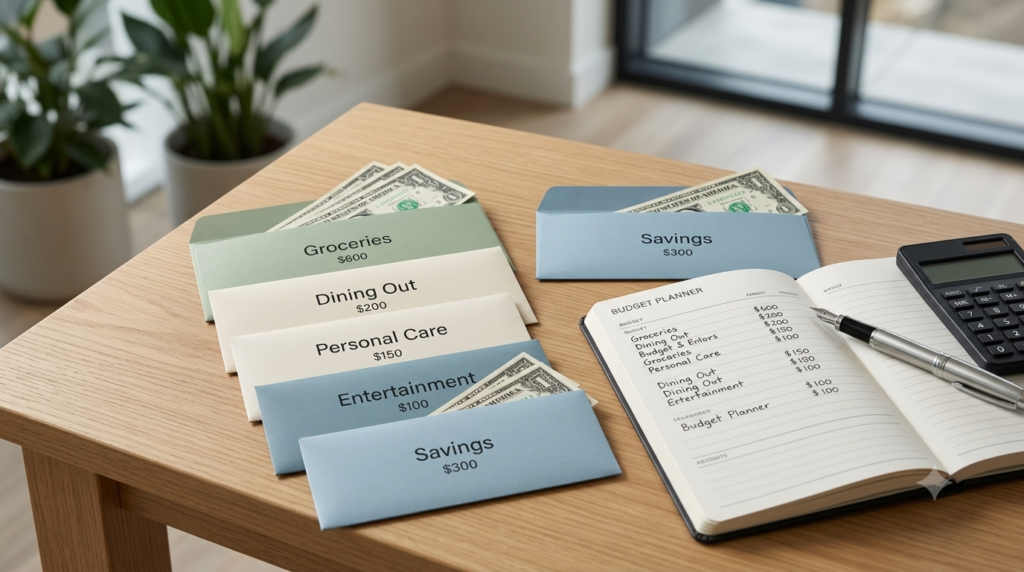
A budget is a forward-looking plan for how you intend to use your money. Cash-flow analysis looks at the movement of money into and out of your finances over a period.
A budget might say that you plan to spend $400 on groceries next month. Cash-flow tracking can show whether you actually spent $400, $500 or $300.
The two systems work especially well together.
A budget tells your money where you intend for it to go. Cash-flow tracking helps you see where the money actually went.
Comparing planned spending with actual cash flow can help you improve future budgets and make more realistic financial decisions.
Personal Cash Flow Example for One Month
Consider a person who receives $4,000 in take-home income during a month.
| Cash Flow Category | Monthly Amount |
|---|---|
| Take-home income | $4,000 |
| Housing | $1,200 |
| Food and groceries | $450 |
| Transportation | $300 |
| Utilities and communication | $250 |
| Insurance | $200 |
| Debt payments | $350 |
| Personal spending | $200 |
| Entertainment | $100 |
| Savings allocation | $400 |
| Other planned expenses | $150 |
| Total allocations | $3,600 |
| Remaining cash flow | $400 |
In this simplified example, $400 remains after the listed allocations. The person could keep part of that amount as a cash buffer or assign it to another financial goal.
The numbers above are only an illustration. There is no universal spending allocation that is appropriate for every person or household.
How to Improve Your Personal Cash Flow
Improving cash flow generally means increasing the money available after necessary outflows, reducing avoidable outflows, or improving the timing of income and expenses.
1. Track where your money goes
Start by reviewing your actual transactions. Look at your bank statements, payment records, bills and other spending information.
Tracking can reveal recurring expenses that are easy to forget and spending patterns that may not be obvious from memory.
2. Review recurring expenses
Recurring expenses deserve special attention because they can affect cash flow every month.
Review subscriptions, memberships, service plans, insurance costs and other recurring payments to determine whether they still provide sufficient value.
3. Reduce unnecessary variable spending
Variable expenses can often provide more immediate flexibility. This does not mean eliminating every enjoyable purchase. Instead, identify spending that provides relatively little value compared with its cost.
4. Increase income where possible
Expense reduction is only one side of cash-flow management. Depending on your circumstances, improving skills, negotiating compensation, increasing work hours, developing additional income sources or growing a business may improve cash flow.
5. Avoid unnecessary lifestyle inflation
When income increases, it can be tempting to immediately increase spending. Allowing part of an income increase to improve savings or reduce expensive debt can strengthen future cash flow.
6. Plan for irregular expenses
Large predictable expenses can disrupt cash flow when they are treated as surprises. Setting money aside regularly can make those expenses easier to manage.
Common Personal Cash Flow Problems
Cash-flow problems do not always come from one large expense. Sometimes they develop from several smaller issues happening simultaneously.
Spending more than your income
The most obvious problem is consistently having more outflows than inflows. If the difference continues, it may require borrowing, using savings or delaying payments.
High fixed expenses
Large recurring commitments can reduce flexibility. Housing, vehicle payments and debt obligations can take a significant portion of monthly income.
Poor expense timing
Even when income is sufficient overall, the timing of bills can create temporary cash shortages. Knowing when money enters and leaves your accounts can help you plan ahead.
Lifestyle creep
Lifestyle creep occurs when spending gradually increases as income rises. Over time, higher income may produce little improvement in financial flexibility if expenses rise at the same pace.
How to Manage Cash Flow With Irregular Income
Managing cash flow can be more challenging when your income changes significantly from month to month.
Freelancers, contractors, commission-based workers, seasonal workers and business owners may experience periods of high income followed by periods of lower income.
In this situation, building essential spending around an optimistic income estimate can create unnecessary risk.
A more conservative approach is to estimate a sustainable baseline and maintain a larger financial buffer when income is strong.
When income is unpredictable, avoid assuming that your highest-income month will repeat every month. Planning around more conservative income can make your cash flow more resilient.
How to Manage Irregular Expenses
Some expenses happen infrequently but are still predictable. Examples can include annual insurance payments, vehicle maintenance, school expenses, holidays, property costs, professional fees and annual subscriptions.
These expenses can create cash-flow pressure if you only budget for bills that arrive every month.
One approach is to divide an expected annual expense across the months before it is due.
For example, if you expect an annual expense of $600, setting aside approximately $50 per month would build $600 over twelve months.
This approach is commonly described as using a sinking fund.
How an Emergency Fund Can Support Cash Flow
An emergency fund is money set aside for unexpected or financially disruptive situations.
Examples might include an unexpected repair, a necessary medical expense, a period of reduced income or another significant financial emergency.
Without savings, an unexpected expense can force someone to rely on credit, loans or other forms of borrowing. That can create additional future cash-flow obligations.
Building emergency savings gradually can therefore provide a buffer between an unexpected expense and your regular monthly cash flow.
The appropriate emergency savings amount depends on factors such as income stability, household responsibilities, essential expenses and access to other resources.
How Debt Affects Personal Cash Flow
Debt can have a major effect on monthly cash flow because required payments reduce the money available for other purposes.
A debt payment can include both principal and interest. Higher-interest debt can be particularly costly because a larger portion of payments may go toward interest rather than reducing the amount owed.
When reviewing cash flow, list all required debt payments and identify the interest rates and balances associated with them.
Once required payments are covered, you can evaluate whether additional payments toward debt fit your broader financial priorities.
Debt repayment and future cash flow
Paying down debt can eventually improve future cash flow by eliminating required monthly payments. However, making very large additional payments can also reduce short-term liquidity.
That is why debt repayment decisions should be considered alongside emergency savings and other financial obligations.
Financial Habits That Can Improve Cash Flow
Good cash flow is often the result of consistent habits rather than one dramatic financial decision.
- Review your spending regularly.
- Know your recurring monthly obligations.
- Plan for irregular expenses before they become due.
- Avoid unnecessary recurring subscriptions.
- Keep a reasonable cash buffer when possible.
- Include savings in your financial plan.
- Review debt payments and interest costs.
- Avoid relying on uncertain future income.
- Compare actual spending with your budget.
- Adjust your plan when your financial circumstances change.
How to Create a Personal Cash Flow Plan
Creating a personal cash-flow plan does not require complicated software. A spreadsheet, budgeting application, notebook or simple document can be enough.
Step 1: List all expected income
Write down the income you reasonably expect to receive during the period.
Step 2: List essential expenses
Record housing, food, transportation, utilities, insurance, required debt payments and other essential obligations.
Step 3: Add flexible spending
Include entertainment, restaurants, hobbies, shopping, subscriptions and other discretionary spending.
Step 4: Add savings and financial goals
Include planned emergency savings, short-term goals, long-term savings and other financial priorities.
Step 5: Calculate the expected balance
Subtract your total planned outflows from expected income.
Step 6: Adjust the plan
If the result is negative, identify which expenses can be reduced, delayed or replaced, and consider whether increasing income is necessary.
Step 7: Compare the plan with reality
At the end of the month, compare your planned numbers with actual transactions. Use what you learn to create a more accurate plan for the following month.
Cash Flow and Financial Stability
Strong cash flow is not necessarily about having a large income. It is about creating enough space between your available income and your financial commitments to manage both current needs and future priorities.
A person with moderate income and controlled expenses may have more financial flexibility than someone with a much higher income but significantly larger obligations.
This is why improving financial health often requires looking beyond income alone.
The goal is to create a system where your money can cover current obligations while leaving room for savings, financial goals and unexpected events.
How Often Should You Track Your Cash Flow?
There is no single tracking schedule that works for everyone. The right frequency depends on how complicated your finances are and how often your income and expenses change.
Weekly review
A short weekly review can help you identify unusual spending, upcoming bills and potential problems before they become significant.
Monthly review
A monthly review provides a broader picture of income, expenses, savings and financial progress.
Annual review
An annual review can help you evaluate larger changes, including income growth, housing costs, debt reduction, savings progress and major financial goals.
Frequently Asked Questions About Personal Cash Flow
What does cash flow mean in personal finance?
Cash flow in personal finance refers to the movement of money into and out of your finances over a specific period. It compares income and other inflows with expenses and other outflows.
What is a good cash flow?
A positive cash flow means that more money is coming in than going out during the period being measured. What constitutes a healthy amount depends on income, expenses, savings goals, debt and individual circumstances.
What causes negative cash flow?
Negative cash flow can result from spending more than income, high fixed expenses, large debt payments, unexpected costs, irregular income or a combination of several financial pressures.
Is cash flow the same as income?
No. Income is money coming into your finances. Cash flow considers both money coming in and money going out during a specific period.
Can I have a high income and poor cash flow?
Yes. High income does not automatically create positive cash flow. If expenses, debt payments and other financial obligations consume most or all of that income, available cash flow can remain limited.
How can I improve my monthly cash flow?
You can improve cash flow by increasing income, reducing unnecessary expenses, reviewing recurring costs, planning for irregular bills, managing debt and avoiding unnecessary lifestyle inflation.
Should savings be included when calculating cash flow?
Savings transfers represent money leaving your spending account, so they can be included when analyzing how much money remains available for other purposes. Including planned savings also provides a more realistic picture of your monthly financial commitments.
How is cash flow different from net worth?
Cash flow measures the movement of money over a period, while net worth represents the value of what you own minus what you owe at a particular point in time. Both provide different information about your financial position.
Can budgeting improve cash flow?
Yes. A well-designed budget can help you anticipate expenses, control discretionary spending, plan savings and identify potential cash-flow shortages before they happen.
Final Thoughts: Make Cash Flow Work for You
Understanding cash flow is one of the foundations of effective personal money management. Start by identifying your real income, tracking where your money goes, separating essential and flexible expenses, planning for irregular costs, managing debt and giving your financial goals a clear place in your monthly plan. You do not need a complicated system. A simple cash-flow routine that you consistently review can help you understand your finances and make more informed decisions as your circumstances change.
Provenzy provides general financial education and information. Financial products, interest rates, fees, laws, tax rules and consumer protections vary by country and individual circumstances. This content is not personalized financial, legal, tax or investment advice. Consider your own circumstances and obtain appropriate professional advice when necessary.