How to Create a Budget You Can Actually Stick To
Learn how to create a realistic budget that fits your actual income, expenses and lifestyle. This practical guide explains how to set spending limits, plan for savings, handle irregular expenses, track your money and build a monthly budgeting system you can maintain over time.

- What Is a Budget You Can Stick To?
- Why Do Budgets Fail?
- Start With Your Real Income
- Track Your Actual Spending
- Create Useful Budget Categories
- Separate Needs From Wants
- Understand Fixed and Variable Expenses
- Plan for Irregular Expenses
- Include Savings in Your Budget
- Budget for Debt Payments
- Choose a Budgeting Method
- Build Your Monthly Budget
- Example Monthly Budget
- Track Your Spending
- How to Adjust Your Budget
- Budgeting With Irregular Income
- Common Budgeting Mistakes
- How to Stick to Your Budget
- Frequently Asked Questions
What Does It Mean to Have a Budget You Can Stick To?
A budget you can stick to is a realistic plan for how you will use your money over a specific period, usually a month. It gives every important part of your finances a place, including essential expenses, discretionary spending, savings and debt payments.
The key word is realistic.
Many people create budgets that look excellent on paper but are difficult to follow in everyday life. They may set extremely low spending limits, forget irregular expenses, leave no room for personal spending or assume that every month will go exactly as planned.
A sustainable budget accepts that real life is unpredictable. Bills change, prices change, emergencies happen and spending priorities can shift.
The best budget is not the one that looks perfect. It is the one you can use consistently and adjust when your circumstances change.
Why Do So Many Budgets Fail?
Understanding why budgets fail is one of the most useful steps toward creating a budgeting system that actually works.
One common problem is setting spending limits based on what you wish you spent rather than what you actually spend. If your household normally spends $400 on groceries, immediately budgeting $150 without a realistic plan for reducing the cost may create a budget that is impossible to maintain.
Another problem is forgetting expenses that do not happen every month. Annual subscriptions, school costs, vehicle maintenance, holidays, insurance payments and medical expenses can disrupt an otherwise carefully planned monthly budget.
Some budgets also fail because they treat every non-essential purchase as a mistake. If a budget leaves no reasonable room for enjoyment, it may become frustrating and difficult to maintain.
Finally, people sometimes abandon their entire budgeting system after one difficult month. A budget should be treated as a planning tool, not as a test that you either pass or fail.
Your budget should make it easier to make good financial decisions without making every purchase feel like a restriction. A successful budget reflects your actual income, recurring expenses, financial priorities and lifestyle.
Step 1: Start With Your Actual Monthly Income
The foundation of a good monthly budget is knowing how much money you realistically have available.
If you receive a regular salary, use your reliable take-home income rather than your gross salary. If you receive money from multiple sources, such as freelance work, commissions, a business or occasional work, identify which income is predictable and which is variable.
Do not build your budget around your best month
If your income changes, it can be tempting to budget according to the highest amount you earned recently. This can create problems when income returns to normal.
A more conservative approach is to build essential expenses around an income level you can reasonably expect. Extra income can then be assigned to savings, debt repayment, taxes, investments or other goals when it arrives.
Use reliable income first
Separate dependable income from bonuses, commissions and uncertain earnings. Your essential monthly budget should not depend on money you may not receive.
Step 2: Track Your Actual Spending
Before deciding how much you should spend in each category, find out where your money is currently going.
Review recent bank statements, card transactions, receipts, mobile-money records and other payment records. Looking at actual spending gives you a much more useful starting point than guessing.
You do not necessarily need to track every transaction forever. However, tracking your spending for at least one or two months can reveal patterns that are easy to miss.
Look for recurring spending
Pay attention to subscriptions, automatic payments, delivery fees, service charges, frequent restaurant purchases and other expenses that may happen repeatedly.
Look for spending that surprises you
Many people discover that their largest budgeting problems are not one major purchase but a collection of smaller expenses repeated throughout the month.
Step 3: Create Budget Categories That Actually Help
A budget becomes easier to use when your categories are detailed enough to provide useful information but simple enough to maintain.
Useful categories may include:
- Housing
- Utilities
- Groceries
- Transportation
- Insurance
- Debt payments
- Personal spending
- Entertainment
- Savings
- Investing
- Irregular expenses
You do not need dozens of categories. If two expenses can reasonably be managed together, combining them may make your budgeting system easier to maintain.
Step 4: Separate Needs From Wants
Separating needs from wants helps you identify where you have flexibility when your budget becomes tight.
Needs generally include expenses required for basic living, safety, work or important financial obligations. Examples may include housing, essential food, necessary transportation, utilities, insurance and minimum debt payments.
Wants are expenses that provide convenience, comfort or enjoyment but are not essential to meeting basic needs. These may include entertainment, restaurant meals, premium subscriptions, hobbies and discretionary shopping.
The distinction can vary between people. Internet access, for example, might be optional for one household but essential for someone who works remotely.
Step 5: Understand Fixed and Variable Expenses
Another important part of creating a realistic budget is understanding which expenses are relatively predictable and which can change from month to month.
Fixed expenses
Fixed expenses generally remain similar from month to month. Examples may include rent, mortgage payments, loan payments and certain insurance premiums.
Variable expenses
Variable expenses can change based on your behavior or circumstances. Groceries, fuel, entertainment, clothing and restaurant spending are common examples.
Variable expenses are often where you have more short-term control. That does not mean every variable expense should be eliminated. Instead, decide how much flexibility each category should have.
Step 6: Plan for Irregular Expenses
One of the biggest reasons monthly budgets fail is that people budget only for bills that arrive every month.
Some expenses happen only once or a few times each year but are still predictable.
Examples include:
- Annual insurance payments
- Vehicle maintenance
- School expenses
- Holiday spending
- Property maintenance
- Annual subscriptions
- Birthdays and special occasions
- Planned medical expenses
If you expect a $600 expense once a year, setting aside approximately $50 per month can make that expense much easier to manage.
This approach is commonly called a sinking fund. The idea is simple: save gradually for a known future expense instead of waiting until the bill arrives.
Step 7: Make Savings Part of the Budget
Saving money becomes easier when it is treated as a planned allocation rather than whatever happens to remain at the end of the month.
Emergency savings
Emergency savings provide a financial buffer for unexpected costs or income disruptions. The appropriate amount depends on your circumstances, essential expenses and income stability.
Short-term savings
Short-term goals may include education, travel, a replacement device, furniture, repairs or another planned purchase.
Long-term savings
Long-term goals may include retirement, education, home ownership or other major financial objectives.
Giving each savings goal a specific purpose can make your progress easier to measure.
Step 8: Include Debt Payments in Your Budget
Debt payments should have a clear place in your monthly financial plan.
Start with required minimum payments. Once essential expenses and other priorities are accounted for, you can decide whether additional money should go toward reducing debt faster.
Debt snowball method
The debt snowball method generally focuses extra repayment money on the smallest balance first while maintaining required payments on other debts.
Debt avalanche method
The debt avalanche method generally focuses extra repayment money on the debt with the highest interest rate first.
The best approach depends on your financial circumstances, interest rates, balances, income and personal preferences.
Step 9: Choose a Budgeting Method
You do not need to use a complicated budgeting system. The best budgeting method is usually the one you understand and can consistently maintain.
Zero-based budgeting
A zero-based budget assigns every unit of income a purpose. The goal is not necessarily to spend everything, but to decide where available money should go before the month unfolds.
50/30/20 budgeting
The 50/30/20 framework is a commonly discussed guideline that divides after-tax income approximately between needs, wants and savings or debt repayment.
It is not a universal rule. Housing costs, family responsibilities, income levels and local living costs can make different percentages more realistic.
Envelope budgeting
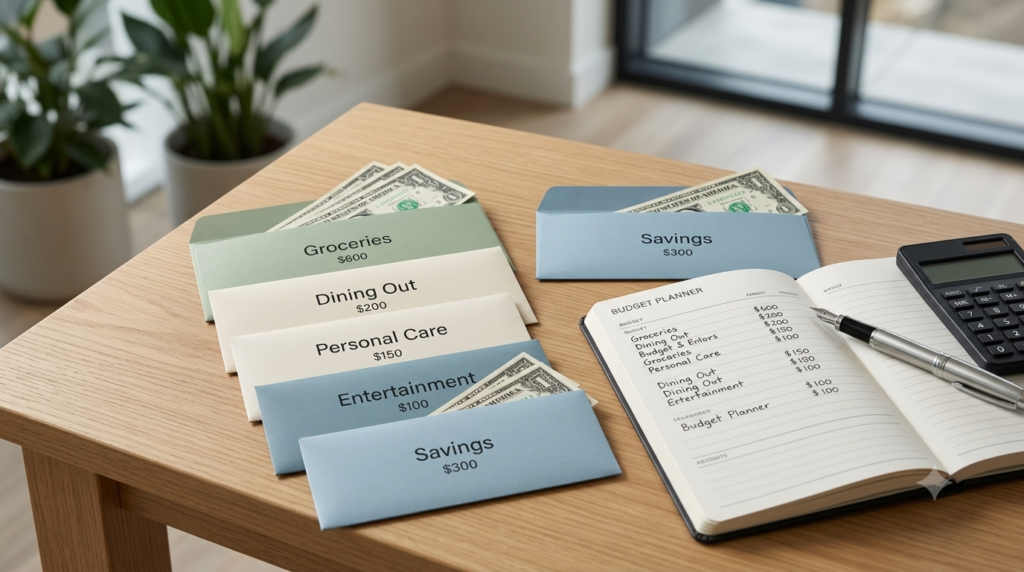
Envelope budgeting assigns spending limits to specific categories. The method can use physical cash or be adapted to digital accounts and budgeting applications.
Step 10: Build Your Monthly Budget
Now bring your income, expenses, savings and financial goals together into one monthly plan.
Start with your expected income. Then subtract essential expenses, planned savings, debt payments, irregular-expense funds and discretionary spending.
If the numbers do not work, do not immediately assume that the answer is to eliminate every enjoyable expense. Look for the largest areas where your budget can realistically change.
Income − planned expenses − savings − debt allocations = remaining available money. Your goal is to create a plan where the numbers are sustainable before the month begins.
Example of a Realistic Monthly Budget
Consider someone with $3,000 in monthly take-home income. The following is only an illustration. A real budget should reflect the person's actual income, location, obligations and goals.
| Category | Planned Amount |
|---|---|
| Housing | $900 |
| Groceries | $350 |
| Transportation | $250 |
| Utilities | $200 |
| Insurance | $150 |
| Debt payments | $300 |
| Personal spending | $150 |
| Entertainment | $100 |
| Emergency savings | $300 |
| Long-term savings | $200 |
| Miscellaneous | $100 |
| Total | $3,000 |
Notice that the example includes both savings and discretionary spending. The purpose is not to create an extremely restrictive budget, but to give every part of the income a deliberate role.
Step 11: Track Your Spending During the Month
Creating a budget is only the first part of budgeting. You also need to compare the plan with what actually happens.
You can track your spending with a spreadsheet, notebook, budgeting application, banking app or another system that is convenient for you.
Review your budget once or twice each week
A short weekly review can help you notice problems before they become difficult to correct.
If your grocery spending is already close to its monthly limit, for example, you can adjust upcoming purchases instead of discovering the problem after the money has already been spent.
Step 12: Adjust Your Budget Instead of Abandoning It
A realistic budget is flexible. If an unexpected expense occurs, update the plan rather than deciding that the entire budget has failed.
You may need to reduce spending in one category to accommodate another expense. You may also decide to temporarily reduce a savings contribution or postpone a discretionary purchase.
The important thing is to understand what changed and why.
A budget should adapt to your financial life. Your financial life should not have to become unrealistic just to satisfy your budget.
How to Create a Budget With Irregular Income
Budgeting becomes more challenging when your income changes from month to month. This can happen with freelance work, commissions, seasonal employment, business income or contract work.
In this situation, avoid building essential expenses around your highest-income month.
Instead, consider using a conservative income estimate and directing income above that amount toward savings, taxes, debt repayment, business costs or other financial priorities.
Give irregular income a job
When extra money arrives, decide in advance how it will be distributed. A predetermined plan can prevent unexpected income from disappearing into unplanned spending.
Common Budgeting Mistakes to Avoid
1. Creating an unrealistic budget
A budget that dramatically underestimates normal spending is unlikely to last.
2. Forgetting irregular expenses
Annual and seasonal expenses need a place in your financial plan.
3. Ignoring small recurring purchases
Small purchases can become significant when repeated throughout the month.
4. Treating savings as an afterthought
If saving is important to you, include it directly in the monthly budget.
5. Making the budget too complicated
A budgeting system that takes hours to maintain may eventually become difficult to follow.
6. Forgetting to leave a buffer
A small flexible amount can help absorb minor unexpected costs without forcing you to rebuild the entire budget.
7. Giving up after one bad month
One difficult month does not mean your budgeting system has failed. Use what happened to improve next month's plan.
How to Stick to Your Budget Every Month
The hardest part of budgeting is often not creating the first budget. It is maintaining the system over time.
Make your budget visible
Keep your budget somewhere you can easily review it. A system that is difficult to access is easier to forget.
Automate important payments and savings where appropriate
Automatic transfers can help with recurring savings goals and scheduled financial obligations when your income and account balances allow it.
Give yourself reasonable discretionary spending
A sustainable budget should leave some room for enjoyment when your financial circumstances permit it. Completely eliminating discretionary spending can make a budget unnecessarily difficult to maintain.
Review recurring expenses
Subscriptions and automatic payments can continue for months or years without much attention. Review them periodically and decide whether they still provide enough value.
Review the budget at the end of every month
Compare planned spending with actual spending. Ask what worked, what did not and what needs to change.
The monthly budgeting habit
Plan before the month, track during the month and review after the month. Repeating this cycle is often more valuable than trying to create a perfect budget once.
Frequently Asked Questions About Creating a Budget
How do I create a budget I can actually stick to?
Start with your real income and actual spending rather than unrealistic targets. Include essential expenses, savings, debt, irregular costs and reasonable discretionary spending. Then review and adjust the budget regularly.
What is the easiest way to start budgeting?
Start with four steps: determine your monthly income, list your regular expenses, review your recent spending and assign the remaining money to savings, debt and flexible spending.
How much should I save each month?
There is no single savings amount that works for everyone. The appropriate amount depends on income, essential expenses, debt, emergency savings, financial goals and personal circumstances.
Should savings be included in a monthly budget?
Yes. Including savings as a planned allocation can make saving more consistent than simply saving whatever money remains at the end of the month.
What should I do if my budget does not balance?
First check whether all income and expenses have been included. Then examine flexible spending, recurring costs, savings allocations and debt payments. If the gap is large, you may need broader changes to expenses or income.
Is the 50/30/20 budget rule right for everyone?
No. The 50/30/20 framework is a guideline rather than a universal requirement. Housing costs, income, family responsibilities, debt and local living costs can make another allocation more appropriate.
How often should I review my monthly budget?
A practical approach is to review spending during the month and perform a more complete review at the end of each month. This allows you to identify patterns and make improvements for the following month.
What if I overspend in one category?
Review why the overspending happened and decide whether money can be moved from another category. If the same problem happens repeatedly, your original budget may need to be adjusted.
Final Thoughts
Creating a budget you can actually stick to is less about finding perfect percentages and more about building a system that reflects your real financial life. Start with reliable income, understand your actual spending, plan for both regular and irregular expenses, include savings and debt payments, and leave enough flexibility for normal life. Then review the results and improve the plan each month. A budget becomes powerful when it becomes a habit rather than a one-time exercise.
Provenzy provides general financial education and information. Financial circumstances, products, rates, fees, laws, tax rules and consumer protections vary by country and individual situation. This article is not personalized financial, legal, tax or investment advice.