What Is a Checking Account? How It Works, Types, Fees, and How to Choose One
A checking account is one of the most important tools for managing everyday money. Learn exactly how checking accounts work, what you can use them for, the different types available, common fees, overdrafts, debit cards, transfers, account safety, and how to choose an account that fits the way you actually manage money.
A checking account is a deposit account designed primarily for frequent everyday transactions. People commonly use checking accounts to receive income, pay bills, make purchases, transfer money and withdraw cash. Unlike an investment account, its main purpose is convenient access to money rather than long-term growth. Some checking accounts may pay interest or offer rewards, but the features, fees and rules vary by financial institution.
For many people, the checking account is the account that sits at the center of their day-to-day financial life. Your salary may arrive there. Your rent, utilities, subscriptions and other recurring bills may be paid from it. Your debit card may draw money directly from it, and you may use it to send money to another person or transfer funds to a savings account.
Because checking accounts are used so frequently, choosing and managing one properly matters. A small monthly fee may seem insignificant, but recurring charges can become expensive over time. An account with poor ATM access can become inconvenient if you regularly use cash. An unsuitable overdraft arrangement can also create unexpected costs.
The good news is that checking accounts are relatively straightforward once you understand the basic mechanics. This guide explains the entire system, from opening an account and depositing money to making payments, understanding available balances, avoiding fees and protecting your account.
What Is a Checking Account?
A checking account is a type of bank or credit-union deposit account intended for regular transactions and convenient access to money. It allows you to keep funds with a financial institution while giving you multiple ways to use those funds for everyday financial activity.
Depending on the institution and the account, you may access your checking account through a debit card, ATM, online banking, mobile banking, electronic transfers, checks, bill-payment services or a physical branch.
The key idea is transactional access. A checking account is generally designed for money that you expect to move in and out regularly. That makes it different from an account whose primary purpose is to hold money for longer-term savings.
Receive Money
Paychecks, transfers and other eligible payments can be deposited into the account.
Spend Money
You can generally make purchases using a debit card or other payment methods supported by the account.
Pay Bills
Checking accounts are commonly used for rent, utilities, subscriptions, loan payments and other recurring expenses.
Move Money
You may be able to transfer money between accounts or send money to other people and financial institutions.
A checking account is therefore best thought of as an everyday money management account. It can be the place where income arrives, spending occurs and short-term cash flow is coordinated.
How Does a Checking Account Work?
The basic process is simple: you deposit money into the account, the financial institution records the transactions associated with the account, and you use available funds for permitted transactions.
Every deposit and withdrawal changes the account's balance. However, one of the most important concepts to understand is that the balance you see on your banking app does not necessarily mean that every dollar is immediately available for every type of transaction.
1. You deposit money
Money can enter a checking account in several ways. Common examples include direct deposits from an employer, cash deposits, check deposits, electronic transfers from another account and transfers from another person.
The exact availability of deposited funds depends on the financial institution, deposit method, local rules and the account's terms. A deposit can appear in your account records before all or part of it becomes available for spending.
2. You make transactions
Once funds are available, you can use supported payment methods. A debit-card purchase, ATM withdrawal, electronic transfer or bill payment generally reduces the money available to you.
3. The transaction is processed
Some transactions appear immediately while others may remain pending for a period of time. This is why monitoring only one number in your banking app can sometimes produce an inaccurate picture of how much money is actually available for new spending.
4. Your transaction history records activity
A checking account normally provides a transaction history showing deposits, purchases, withdrawals, transfers, fees and other account activity. Reviewing that history is an important part of managing the account.
A Simple Checking Account Example
Imagine you receive 2,000 units of your local currency into your checking account at the beginning of the month.
- Income deposited: +2,000
- Rent paid: −800
- Groceries: −250
- Utilities: −120
- Debit-card purchases: −180
- Transfer to savings: −300
The remaining amount represents money that has not been allocated to those transactions. The example is intentionally simple, but it demonstrates the central role of checking accounts: money comes in, planned obligations are paid, spending occurs, and funds can be transferred to other financial goals.
The important lesson is that a checking account should be managed based on available money and upcoming obligations, not simply the headline balance displayed on a screen.
What Is a Checking Account Used For?
Checking accounts are built around frequent transactions. The exact services available vary, but the following are among the most common uses.
Receiving income
Many people use checking accounts as the destination for their salary or other recurring income. Direct deposit can make this process automatic, reducing the need to receive and manually deposit a physical check.
Paying bills
Rent, utilities, insurance, subscriptions, loan payments and other recurring obligations can often be paid directly from a checking account.
Everyday purchases
A debit card connected to the account can usually be used for everyday purchases wherever the relevant payment network is accepted.
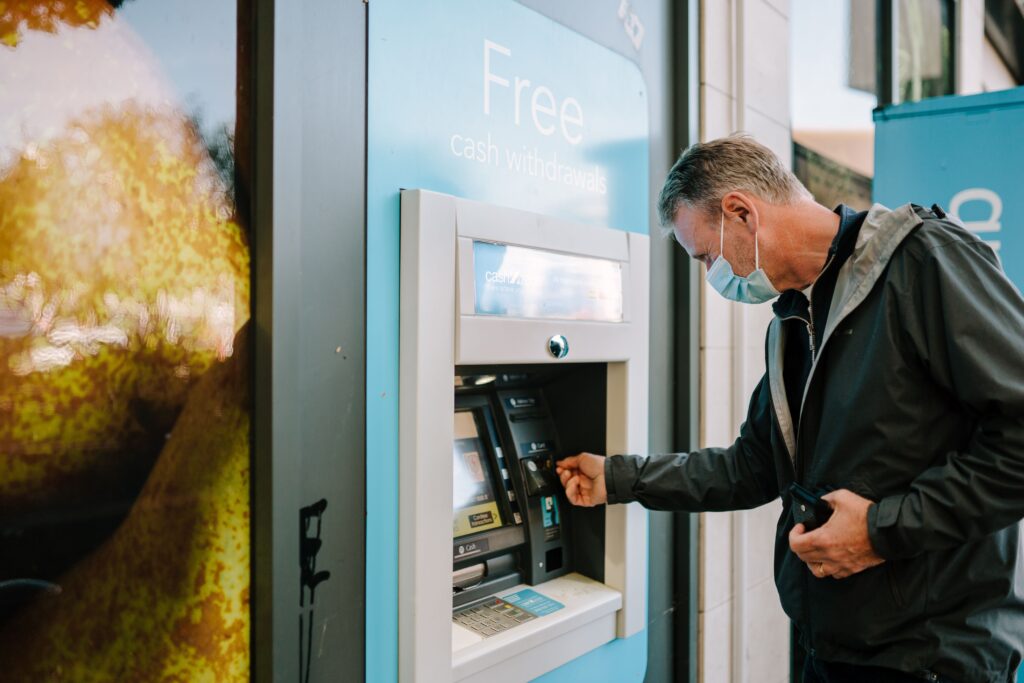
ATM withdrawals
Checking accounts can provide access to cash through ATMs. The cost and availability of this service depend on the institution's ATM network and account terms.
Electronic transfers
Checking accounts can often be used to transfer money to savings accounts, other bank accounts or other people, depending on the payment services supported by the institution.
Checks
Some checking accounts provide paper checks. Although electronic payments and debit cards have reduced the role of paper checks in many places, checks remain useful for certain transactions.
Managing monthly cash flow
A checking account can function as the operating account for a personal budget. Income comes in, regular expenses are paid, discretionary spending occurs and planned transfers move money toward savings or other goals.
Types of Checking Accounts
There is no single checking account that works for everyone. Financial institutions may offer different account structures, pricing models and eligibility requirements.
1. Standard checking accounts
A standard checking account is designed for ordinary everyday banking. It may include a debit card, online banking, mobile banking, bill payment, ATM access and sometimes check-writing privileges.
The main thing to investigate is not the label but the actual terms: monthly fees, minimum balance requirements, ATM access, overdraft rules and transaction costs.
2. Free or no-monthly-fee checking accounts
Some accounts do not charge a recurring monthly maintenance fee. However, the word “free” should not be interpreted as meaning that every possible service is free.
An account may still have charges associated with certain ATMs, wire transfers, overdrafts, paper checks, stop-payment requests or other services. Always review the account's fee schedule.
3. Online checking accounts
Online-focused institutions generally emphasize digital account management rather than extensive physical branch networks. This can be attractive to people who prefer managing their finances through a phone or computer.
The trade-off can be reduced access to physical branches or cash services, depending on the institution.
4. Interest-bearing checking accounts
Some checking accounts pay interest on eligible balances. This can be useful for people who regularly maintain money in checking rather than moving every excess dollar elsewhere.
However, higher advertised rates may come with conditions such as minimum balances, direct deposits, transaction requirements or maximum balances eligible for the advertised rate.
5. Rewards checking accounts
Rewards checking accounts may provide cash rewards, interest or other benefits when specific requirements are satisfied.
These accounts should be evaluated based on the total value of the benefits after considering fees, requirements and your actual banking behavior.
6. Student checking accounts
Student accounts may be designed around younger customers or people beginning to manage their own finances. They may offer simplified requirements or lower fees.
One important question is what happens when you graduate or stop meeting the account's eligibility requirements.
7. Low-risk or limited-feature transaction accounts
Some institutions offer accounts designed to reduce the possibility of overdrawing. Depending on the account, transactions may simply be declined when sufficient funds are unavailable rather than being paid into an overdraft arrangement.
These accounts can be useful for people who prioritize spending only money they already have, although they may have fewer features than a traditional full-service checking account.
Important Checking Account Features
When comparing checking accounts, avoid choosing based on one attractive feature. The best account is usually the one that fits your complete banking pattern: how money enters your account, how you spend, where you withdraw cash and which services you actually use.
Monthly maintenance fee
Some checking accounts charge a recurring fee simply for maintaining the account. Other accounts have no monthly fee, while some waive the fee if you satisfy certain conditions.
Minimum balance requirements
An account may require you to keep a certain amount of money in the account to avoid a fee or receive a particular benefit.
A requirement is only useful if it fits your financial situation. An account that technically has a fee waiver may not be cheap if keeping the required balance causes you to keep too much money in a low-yield account.
ATM access
ATM access matters particularly if you frequently use physical cash. Consider the size of the institution's network, availability in places you regularly visit and whether out-of-network fees are reimbursed.
Mobile banking
A useful banking app can make everyday account management easier. Depending on the institution, you may be able to check balances, transfer money, deposit checks, pay bills, lock a debit card, receive alerts and review transactions.
Direct deposit
If you receive regular employment income, direct deposit can make receiving money simpler. Some accounts also use qualifying direct deposits as part of their fee-waiver or rewards requirements.
Bill payment
Online bill payment can help automate recurring obligations. Before relying on it, understand when payments are scheduled and how much processing time may be required.
Customer support
Customer support becomes particularly important when something goes wrong. Consider whether the institution provides branches, telephone support, secure messaging, live chat or other assistance that works for you.
Debit-card controls
Some banking apps allow customers to temporarily lock a debit card, receive transaction alerts or control certain card settings. These features can be useful for both convenience and security.
Common Checking Account Fees
Fees are one of the biggest differences between checking accounts. A bank account that looks attractive because of a low advertised monthly cost can become expensive if you regularly encounter other charges.
| Potential Fee | What It May Relate To | What to Check |
|---|---|---|
| Monthly maintenance fee | Keeping the account open | Whether it can be waived and how |
| ATM fee | Using certain ATMs | Network size and reimbursements |
| Overdraft fee | Transactions paid despite insufficient funds | Overdraft policy and alternatives |
| NSF-related charge | Transactions returned or declined because funds are insufficient | Institution-specific policy |
| Wire transfer fee | Sending or receiving certain wires | Domestic and international pricing |
| Paper statement fee | Receiving physical statements | Electronic statement options |
| Stop-payment fee | Requesting cancellation of certain payments | Fee amount and eligibility |
Monthly maintenance fees
A monthly maintenance fee is a recurring charge associated with maintaining an account. Some institutions waive it if customers satisfy requirements such as qualifying direct deposits or balance thresholds.
ATM fees
You may encounter a fee when using an ATM outside your institution's network. In some cases there can be more than one charge, such as a fee from the ATM owner and another fee from your own institution.
Overdraft and insufficient-funds fees
These costs can arise when transactions exceed available funds or when a payment is returned or declined because the account does not have sufficient funds. Policies differ substantially between institutions.
Other service fees
Depending on the account, additional charges can apply to wire transfers, paper checks, stop-payment requests, special statements, foreign transactions or other services.
What Is an Overdraft?
An overdraft can occur when you do not have enough available money in your checking account to cover a transaction, but the financial institution nevertheless pays the transaction.
Depending on the institution and transaction type, a transaction may instead be declined or returned. This is why understanding your account's specific overdraft policy is important.
How an overdraft can happen
Overdraft situations can result from debit-card purchases, ATM withdrawals, checks, automatic payments or electronic transactions, depending on the institution's policies.
Why overdrafts can become expensive
An overdraft is not simply about being short by a small amount. Fees can make a temporary shortage more expensive, and repeated overdrafts can create a cycle in which the next deposit is partly consumed by previous charges.
Banks and credit unions use different overdraft programs and fee structures. Some allow customers to link another account, while others offer lines of credit or simply decline transactions when funds are unavailable.
How to reduce overdraft risk
- Monitor your available balance rather than relying only on memory.
- Track upcoming automatic payments.
- Use low-balance alerts when available.
- Keep a reasonable cash buffer if your budget allows it.
- Understand how pending transactions affect your available funds.
- Review your institution's overdraft options and fees.
In the United States, federal rules generally require affirmative consumer consent before an institution can charge an overdraft fee for ATM and one-time debit-card transactions under the relevant overdraft service rules. Other transaction types, such as checks and ACH payments, can have different treatment. Banking rules vary by country, so consumers should check the regulations and account terms that apply where they live.
Current Balance vs. Available Balance
One of the most useful things to understand about checking accounts is that your displayed balance and the amount you can safely spend may not always be identical.
Current or ledger balance
This generally represents the balance recorded by the financial institution based on transactions that have been posted to the account. The exact meaning can differ between institutions.
Available balance
Available balance generally focuses on the amount currently available for spending or withdrawal after considering certain pending transactions, holds or funds-availability rules.
The distinction matters because a transaction can be authorized, pending or otherwise not yet fully posted. Likewise, a recent deposit may appear in your account while some or all of the funds are not yet available for use.
Simple Example
Suppose your account shows a balance of 1,000. You then make a purchase for 150 that has not fully posted yet.
Depending on how your financial institution displays the transaction, the headline balance may temporarily differ from the amount the bank considers available for another transaction.
This is why checking the account's available balance and reviewing pending transactions can be safer than assuming every displayed dollar is available to spend.
Checking Account vs. Savings Account
Checking and savings accounts are both deposit accounts, but they are usually designed for different jobs.
| Feature | Checking Account | Savings Account |
|---|---|---|
| Primary purpose | Everyday transactions | Setting money aside |
| Frequent spending | Generally expected | Usually less central |
| Debit card | Common | Depends on institution |
| Interest | May or may not pay interest | Often designed to earn interest |
| Typical role | Cash flow and spending | Savings and reserves |
Neither account is automatically “better.” They serve different purposes. A person might use checking for bills and everyday purchases while using savings for an emergency fund, a future purchase or another financial goal.
Online Checking Accounts vs. Traditional Bank Checking
A checking account can be offered by an online-focused institution, a traditional branch-based bank, a credit union or another type of regulated financial institution depending on the country.
Online-focused banking
- Usually emphasizes mobile and online account management.
- May provide competitive fees or digital features.
- Can be convenient for people who rarely need branches.
- May provide fewer physical locations.
- Cash access may depend on an ATM network or partner network.
Traditional branch banking
- Can provide physical branches.
- May make cash deposits and in-person service easier.
- Can offer a broad range of financial products.
- Some accounts may have higher fees.
- Digital services can still be substantial.
The important question is not whether online or traditional banking is universally better. Ask which model fits the way you actually manage money. If you rarely use branches and value digital convenience, an online-focused account may suit you. If you frequently deposit cash or want face-to-face assistance, physical access may matter more.
How Much Money Should You Keep in a Checking Account?
There is no universal checking-account balance that everyone should maintain. The right amount depends on your income schedule, monthly expenses, payment timing, financial stability and how quickly you can access other funds.
A practical approach is to keep enough money available for your upcoming obligations and normal spending while avoiding the habit of leaving large amounts of long-term savings in an account that is not designed for that purpose.
Consider your upcoming bills
Start with expenses that are already committed. Rent, mortgage payments, utilities, insurance, loan payments and subscriptions can all reduce the amount that is truly available for discretionary spending.
Consider your income schedule
Someone paid weekly may manage checking differently from someone paid once per month. Your balance needs to bridge the gap between income arriving and bills being due.
Consider a reasonable buffer
A buffer can help absorb timing differences or small unexpected expenses. The size should fit your budget rather than being based on an arbitrary universal number.
Separate short-term money from long-term money
If money is not needed for ordinary spending, consider whether it belongs in an account designed for savings or another financial goal rather than leaving everything in checking.
How to Choose a Checking Account
Choosing a checking account should begin with your real banking behavior, not with an advertisement or a promotional headline.
1. Identify how money enters your account
Do you receive a salary, business income, transfers from family, government payments or other forms of income? Understanding your deposit pattern helps you evaluate direct deposit requirements, deposit methods and transaction timing.
2. Identify how you spend
Think about your normal activity. Do you use a debit card every day? Pay many bills? Use cash frequently? Send transfers? Write checks?
3. Compare the total cost
Do not compare only monthly maintenance fees. Consider the charges that are relevant to your actual behavior, including ATM, transfer, overdraft, wire and other service fees.
4. Check ATM access
If you regularly withdraw cash, a convenient ATM network can be more important than a small difference in another account feature.
5. Evaluate the mobile app
If you expect to bank digitally, check whether the account supports the functions you actually need: alerts, transfers, mobile check deposits, card controls, bill payments and transaction monitoring.
6. Understand overdraft rules
Know what happens if a transaction exceeds your available balance. Look at the institution's overdraft, insufficient-funds and linked-account options.
7. Check minimum requirements
Make sure any balance or direct-deposit requirement is realistic. An account is not necessarily a good deal if you must constantly adjust your finances just to avoid a fee.
8. Consider customer service
Think about how you want help when something goes wrong. Branches, telephone support, secure messaging and live chat can all have different value depending on your circumstances.
How to Open a Checking Account
Opening a checking account generally involves choosing a financial institution, selecting an account and completing an application. The exact requirements depend on the institution, account type and country.
A typical process
- Determine what you need from the account.
- Compare available checking accounts.
- Review fees, minimum requirements and transaction policies.
- Choose a bank, credit union or other appropriate institution.
- Complete the application online or in person.
- Provide the identification and information requested.
- Make an opening deposit if required.
- Set up online or mobile banking.
- Activate and secure your debit card if one is provided.
- Set up direct deposit and recurring payments if appropriate.
Before moving all of your financial activity to a new account, make sure you understand the institution's transaction limits, deposit availability, fees and account security procedures.
How to Use a Checking Account Safely
Checking accounts can be connected to debit cards, automatic payments, electronic transfers and other financial services. Protecting the account therefore requires more than simply protecting the physical card.
Watch your transaction history
Regular monitoring can help you identify forgotten subscriptions, unexpected charges, fraudulent activity or errors sooner.
Be careful with verification codes
A legitimate financial institution may use security codes as part of authentication, but you should never disclose a verification code to someone who unexpectedly contacts you and asks you to read it back.
Protect the device used for banking
If you manage your checking account through a phone or computer, the security of that device becomes part of the security of your finances. Use screen locks, updates and reputable security practices.
Common Checking Account Mistakes to Avoid
1. Choosing an account based only on the monthly fee
A zero-monthly-fee account may still be expensive if its ATM, transfer or other charges regularly affect you.
2. Ignoring the fee schedule
Do not rely entirely on the word “free.” Read the actual account terms.
3. Spending the displayed balance without considering pending activity
Pending purchases and upcoming automatic payments can reduce the money that is truly available for new spending.
4. Keeping no buffer at all
A checking account that is always sitting exactly at the amount of your expected expenses can be vulnerable to timing differences and unexpected transactions.
5. Ignoring overdraft policies
You should know whether transactions are declined, paid through an overdraft program, transferred from another account or handled another way.
6. Never reviewing transactions
Regular monitoring is one of the simplest ways to catch errors, unwanted subscriptions and unauthorized activity.
7. Leaving everything in checking
Checking is designed for transactions. If you keep significant amounts of money that you do not need for everyday spending there indefinitely, you should at least consider whether another account or financial vehicle is more appropriate for that purpose.
8. Choosing an account because of a temporary promotion
Bonuses can be attractive, but the long-term account structure usually matters more. Consider what the account costs and how useful it remains after the promotional period ends.
Checking Accounts in Real-Life Situations
Example 1: An employee receiving a monthly salary
A person receives their salary once per month. Their checking account is used for rent, utilities, groceries, transportation and subscriptions. They automatically transfer a portion of each salary to a savings account.
For this person, predictable access to the account, bill-payment functionality, low fees and good transaction alerts may matter more than earning a small amount of interest on the checking balance.
Example 2: Someone who uses cash frequently
Another person makes frequent cash withdrawals. For them, ATM availability and fee reimbursement could be more important than an attractive digital-only feature.
Example 3: Someone who keeps a larger operating balance
A person with stable income and predictable expenses may regularly keep a larger balance in checking. An interest-bearing checking account might be worth evaluating, but only if the account's conditions make sense.
Example 4: Someone trying to avoid overdrafts
Someone who wants strict spending control may prefer an account structure where transactions are declined when sufficient funds are unavailable rather than relying on paid overdraft coverage.
Who Can Benefit From a Checking Account?
Checking accounts are useful for a wide range of people because everyday financial life involves receiving and spending money.
Employees
Useful for receiving wages, paying bills and managing everyday spending.
Students
Can provide a practical introduction to managing personal spending and regular payments.
Families
Can be used to coordinate household income, bills and regular expenses.
Small Business Owners
Business banking should generally be separated from personal finances, but a dedicated business transaction account can serve a similar operational role.
When a Checking Account May Not Be the Best Place for Your Money
A checking account is useful for everyday transactions, but that does not mean every dollar should remain there.
If money is intended for an emergency reserve, a future purchase or another savings objective, you may want to consider an appropriate savings product. If money is intended for long-term growth and you can accept investment risk, investing may be more appropriate depending on your circumstances.
The key principle is to give each dollar a job. Checking can handle the money that needs to move. Savings can hold money that needs to remain available but is not required for everyday spending. Investments may be used for longer-term goals where appropriate.
Where a Checking Account Fits Into Your Banking Plan
A checking account is usually only one part of a broader banking setup. Once you understand its role, you can compare it with other account types and determine how each account should be used.
These guides serve different purposes. This article explains the checking account itself. A comparison guide can help you evaluate checking-account options, while a broader account-selection guide can help you decide whether checking, savings or another type of account fits a particular financial need.
Checking Account Checklist
Before opening or switching to a checking account, use this checklist to make sure you have considered the most important practical factors.
Checking Account FAQs
Final Thoughts: Is a Checking Account Right for You?
For most people who regularly receive and spend money, a checking account can be one of the most useful parts of a personal banking system. It provides a central place to receive income, pay bills, make purchases, transfer funds and manage everyday cash flow.
But the value of a checking account depends on its terms. Two accounts can look similar while having very different fees, ATM access, overdraft policies, digital features and requirements.
The smartest approach is therefore not simply to find an account that calls itself “free,” “premium,” “rewards” or “high interest.” Instead, look at how the account works in practice and compare those features with the way you actually manage your money.
A good checking account should make everyday financial management easier, predictable and reasonably inexpensive. Once you understand how the account works, you can use it more effectively and make better decisions about where to keep the rest of your money.
Build a Better Banking Strategy
Understanding checking accounts is the starting point. The next step is learning how to compare accounts, evaluate fees and decide which combination of checking and savings products fits your financial needs.
Explore the Provenzy Banking Hub →