How to Choose the Right Bank Account for Your Needs
Choosing a bank account is not simply about finding the bank with the highest interest rate or the account with the lowest advertised fee. The right choice depends on what you want your money to do, how often you need access to it, how you receive and spend money, and which banking features genuinely matter to your financial life.
Financial research specialist at Provenzy
Choosing a bank account can look much more complicated than it actually is. Financial institutions offer many products, and advertisements often emphasize one attractive feature: a high interest rate, a cash bonus, no monthly fee, a large ATM network, or a particular technology feature.
The problem is that no single feature tells you whether an account is right for you.
A savings account with an attractive rate may not be appropriate for money you spend every day. A checking account with excellent digital tools may be inconvenient if you regularly deposit cash. A certificate of deposit may offer a predictable return but may be unsuitable for money you might need tomorrow.
The best approach is therefore to start with your own financial situation and work outward.
Start With What You Need the Account to Do
The most useful question to ask before choosing a bank account is not “Which bank is best?”
Ask: “What job do I need this account to perform?”
This question immediately eliminates many unsuitable options. If you need an account for everyday purchases, you probably do not want an account designed primarily for locking money away for a fixed period. If you are building emergency savings, you may not want all of that money sitting in the same account you use for daily spending.
Everyday Spending
You need an account for purchases, bills, transfers, withdrawals, income deposits, and regular financial activity.
Emergency Savings
You want money available for unexpected expenses while keeping it separate from everyday spending.
Short-Term Goal
You are saving for something such as education, travel, a major purchase, or another goal within a relatively defined time period.
Longer-Term Cash
You have money you do not expect to need immediately and want to evaluate options for earning interest.
Shared Finances
You need an account used by two or more people and want to understand ownership, access, deposits, and withdrawals.
Specific Financial System
You want separate accounts for bills, spending, savings, household expenses, or other parts of your financial system.
Why starting with the purpose matters
Imagine someone asks you to choose the best vehicle without telling you whether they need it for commuting, transporting cargo, traveling with a family, or racing.
The question cannot really be answered.
Bank accounts work in a similar way. “Best” only has meaning when you know what the account needs to accomplish.
Understand the Main Types of Bank Accounts
Once you know what you want the account to do, the next step is identifying the account type that is designed for that purpose.
The exact products available vary between countries and institutions, but several major account categories appear frequently across banking systems.
Checking Account
Primarily designed for frequent transactions such as purchases, bill payments, transfers, deposits, and withdrawals.
Everyday moneySavings Account
Generally designed for setting money aside rather than using it for constant everyday transactions.
SavingHigh-Yield Savings
A savings-oriented account designed to provide a potentially higher rate than a basic savings account, depending on the institution and market.
Higher savings returnMoney Market Account
May combine savings characteristics with certain transaction or access features. Requirements vary considerably.
Savings + accessCertificate of Deposit
Generally involves keeping money deposited for a defined period in exchange for a stated rate or return structure.
Fixed-term savingsJoint Account
Allows multiple people to share ownership or access according to the institution's account agreement.
Shared financesChecking vs. savings: the basic distinction
A checking account is generally designed for movement of money. You may receive income, make purchases, pay bills, transfer funds, and withdraw cash from it.
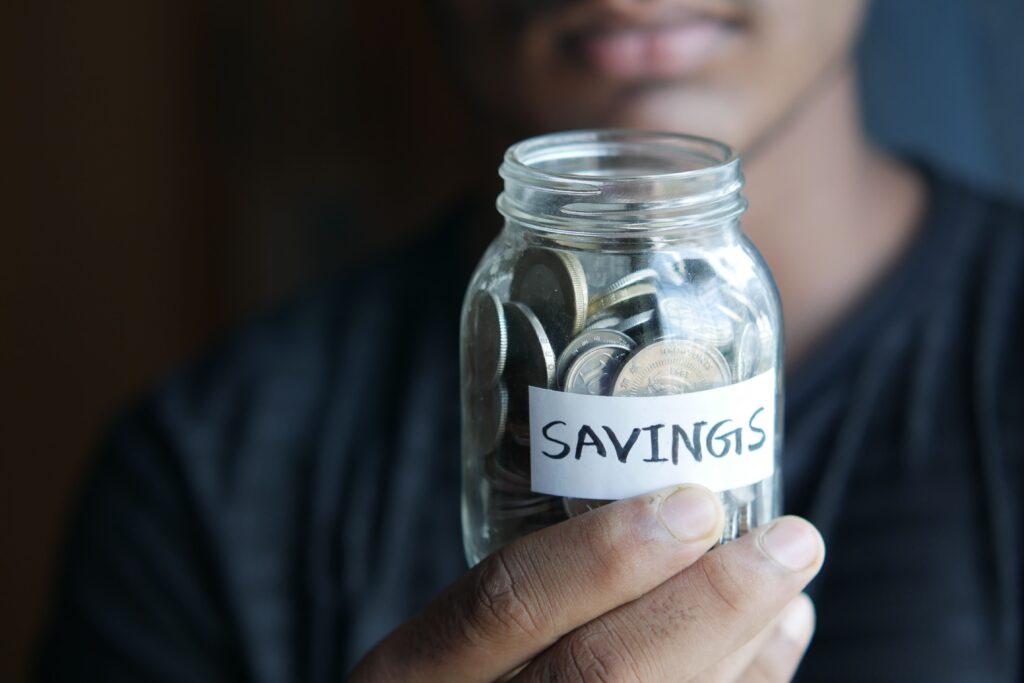
A savings account is generally designed for money you intend to keep aside. It may earn interest and can provide a psychological and practical separation between money for spending and money for future needs.
This distinction does not mean every person should have exactly one checking account and one savings account. Your financial system may need more or fewer accounts.
Do not confuse “more features” with “better”
A common mistake is assuming that an account becomes better as the number of features increases.
In reality, unnecessary features can create complexity.
If you only need a simple account for receiving income and paying ordinary expenses, a complicated product with numerous conditions may not improve your financial life.
Compare the Total Cost, Not Just One Fee
After choosing the appropriate account type, examine the cost.
This is where many comparisons become misleading. One account may advertise “no monthly fee,” while another may advertise a high interest rate. Neither statement tells you the complete financial picture.
You need to understand what the account will realistically cost you over time.
| Cost or Requirement | What to Ask | Why It Matters |
|---|---|---|
| Monthly maintenance fee | Is there a recurring fee? Can it be waived? | Recurring charges can become a significant annual cost. |
| Minimum balance | What balance must be maintained? | A requirement may be difficult during low-income months. |
| ATM fees | Which ATMs are free? | Important if you frequently withdraw cash. |
| Overdraft-related costs | What happens when funds are insufficient? | Can matter greatly during cash-flow problems. |
| Transfer fees | Are transfers charged? | Relevant if you regularly move money. |
| International costs | What happens when using the account abroad? | Important for frequent travelers. |
| Early withdrawal | Does the product have a fixed term or penalty? | Particularly important for time-locked savings products. |
| Paper statements | Are physical statements charged? | Relevant if you prefer paper records. |
The “free account” trap
A bank account marketed as free may still have fees associated with particular services or situations. The important question is not simply whether the word “free” appears in an advertisement.
The important question is: “What could I actually be charged for?”
Read the account's fee schedule and disclosures before opening it.
Calculate your realistic annual cost
Instead of asking which account has the lowest advertised fee, estimate your likely annual cost.
This approach is much more useful because it reflects your behavior.
When Interest Rate and APY Should Matter
Interest becomes especially important when you are comparing savings-oriented accounts.
You may see both an interest rate and an annual percentage yield, commonly called APY. APY is useful for comparing the annual effect of interest and compounding when the other conditions are comparable.
But the highest number is not automatically the best choice.
Ask these questions about an advertised rate
- Is the rate variable or fixed?
- Is there a minimum balance?
- Is there a maximum balance that earns the advertised rate?
- Are there activity requirements?
- Are there monthly fees?
- Can the institution change the rate?
- Does the rate apply to the entire balance or only part of it?
- Are there restrictions on accessing the money?
Why a lower rate can sometimes be more useful
Imagine Account A offers a higher advertised rate but charges a monthly fee and requires a balance you struggle to maintain. Account B offers a somewhat lower rate but has no meaningful fee and gives you easier access.
Account B could provide greater practical value depending on your balance and usage.
The lesson is simple: never evaluate an interest rate without evaluating the conditions attached to it.
Be Careful With Minimum Balance Requirements
Minimum balance requirements can look harmless when you have plenty of money available. They become much more important when your income or cash flow changes.
Consider someone whose income varies from month to month. An account requiring a substantial balance to avoid a fee may be comfortable during a high-income month but expensive during a difficult month.
This is why account requirements should be compared against your normal financial reality, not your best month.
Think About How You Will Access Your Money
Access is one of the most overlooked parts of choosing a bank account.
A bank can have an excellent website, attractive interest rates, and low fees, but if you regularly need services it cannot provide conveniently, the account may not fit you.
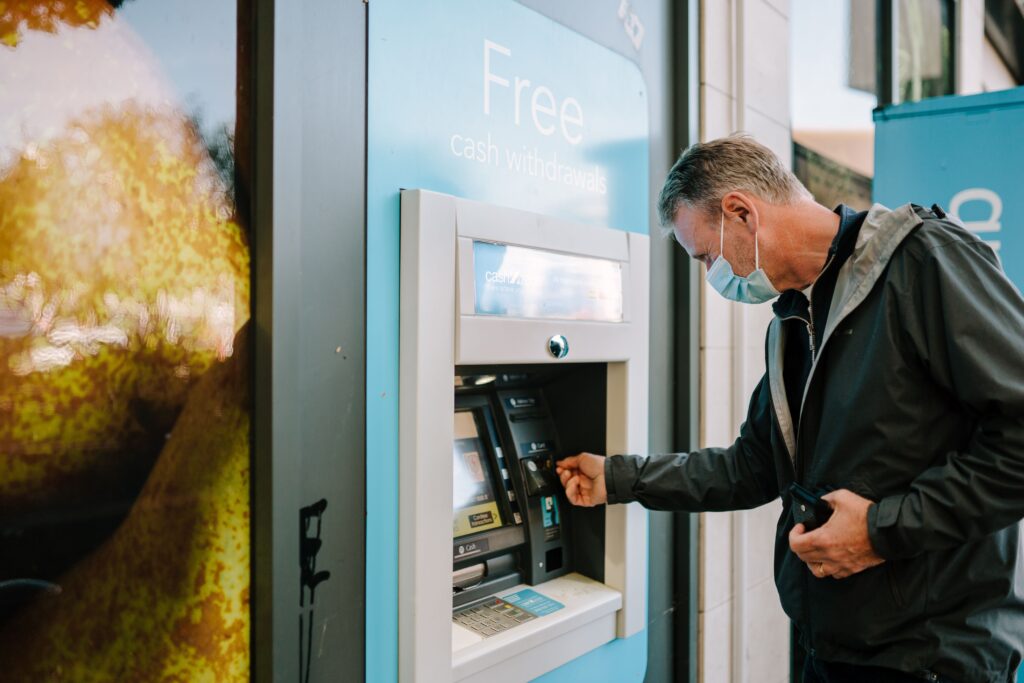
ATM access
If you regularly withdraw cash, examine the ATM network before opening the account.
Ask where the nearest convenient ATMs are, what happens when you use another institution's ATM, and whether certain ATM fees are reimbursed.
Branch access
Physical branches matter more to some people than others.
You may value a branch if you regularly handle cash, need face-to-face support, want help with certain transactions, or simply prefer dealing with a person when something goes wrong.
If you almost never visit a branch, paying for a banking relationship primarily because of its physical locations may not provide much value.
Cash deposits
This deserves special attention.
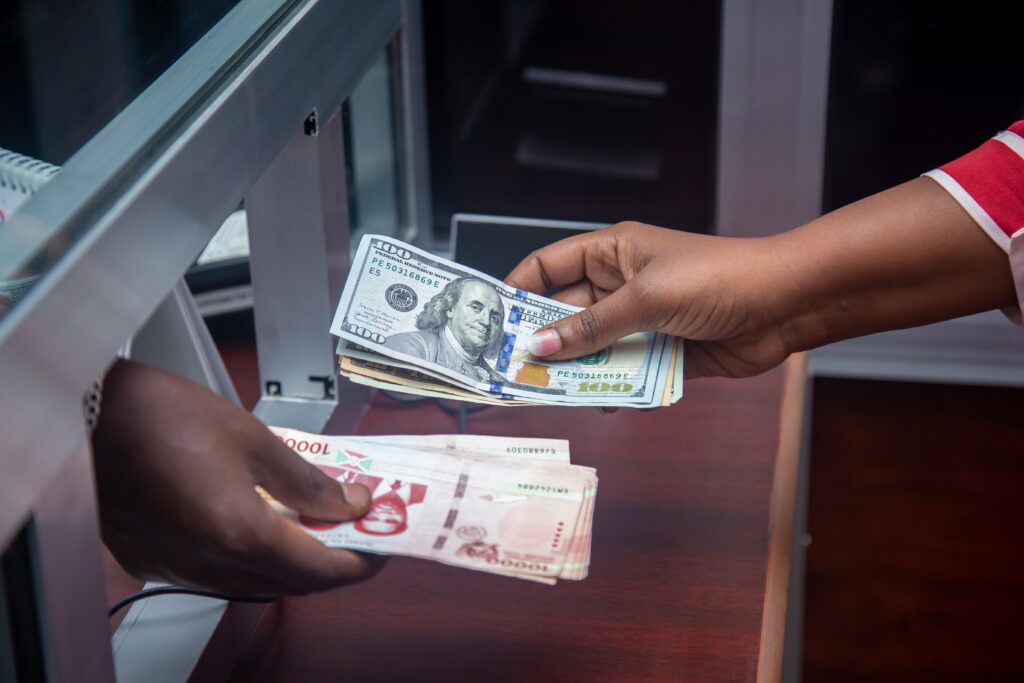
People who receive cash as part of their income or everyday activities should verify exactly how cash deposits work before choosing a bank.
Do not assume that every online-focused institution provides the same cash-deposit experience as a traditional branch-based institution.
Check deposits
If you receive checks, determine how they can be deposited and whether mobile deposit is available where you live.
Travel access
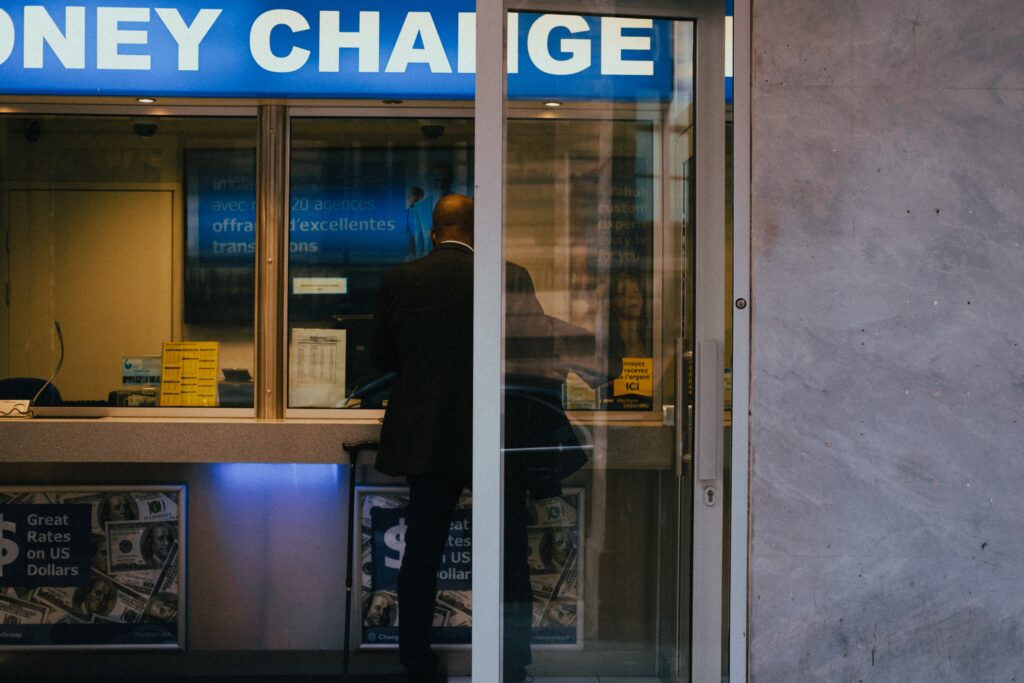
Frequent travelers should also consider how easy it is to access money away from home.
ATM availability, card controls, international transaction policies, fraud alerts, and customer support can all become important when you are away from your normal banking locations.
Evaluate the Digital Banking Experience
For many people, the mobile app and online banking platform are now the primary way they interact with their financial institution.
Therefore, digital banking should be treated as a practical feature, not merely a marketing extra.
Useful digital features can include:
- Real-time or timely transaction visibility
- Mobile check deposit
- Account-to-account transfers
- Bill payment
- Automatic transfers
- Transaction alerts
- Low-balance alerts
- Card controls
- Digital statements
- Secure messaging
- Account security controls
Do not evaluate an app only by appearance
A beautiful banking app is not necessarily a useful banking app.
What matters is whether you can perform the tasks you actually need quickly and reliably.
If you manage your finances primarily through your phone, features such as transaction alerts, card controls, transfers, statements, and secure support may be more valuable to you than a decorative interface.
Online Bank vs. Traditional Bank
The question “Are online banks better?” does not have one universal answer.
It depends on what you value.
| Factor | Online-Focused Banking | Traditional Branch Banking |
|---|---|---|
| Physical branches | Usually limited or unavailable | Generally available |
| Digital tools | Often a major focus | Usually available |
| Cash deposits | May require special methods | Often easier |
| In-person support | Usually unavailable | Available where branches exist |
| ATM access | Depends on network | Usually tied to branch/ATM network |
| Convenience | Strong for digital-first users | Strong for users who value physical access |
When online banking may make sense
An online-focused institution may suit you if you are comfortable managing money digitally, rarely need branches, and prioritize convenient digital access.
When traditional banking may make sense
A branch-based institution may be more useful if you frequently deposit cash, want face-to-face service, or need physical access to banking services.
Check Security and Deposit Protection
A bank account is not simply a place to store numbers on a screen. It is part of your financial security system.
Before opening an account, understand the institution you are dealing with and determine what regulatory and deposit-protection framework applies in your jurisdiction.
Deposit-protection systems differ between countries, including eligibility requirements, coverage limits, and the types of products covered.
Questions worth asking
- Is the institution properly regulated?
- What deposit-protection system applies?
- What account types are covered?
- Are there coverage limits?
- Are the funds held directly by the regulated institution?
- What security controls are available?
- How can suspicious transactions be reported?
- How can a lost or stolen card be restricted?
Consider Customer Service Before You Need It
Customer service is one of those features that can feel unimportant until something goes wrong.
Imagine discovering an unfamiliar transaction late at night, losing your card while traveling, having a transfer fail, or suddenly being unable to access your account.
In those moments, the quality and availability of support can matter much more than a small difference in interest rate.
Look at the available support channels
- Phone support
- Secure messaging
- Online chat
- Email where applicable
- Physical branches
- Emergency card support
- Fraud reporting procedures
You do not necessarily need the institution with the largest support operation. You need one whose support structure fits your needs.
Choose Based on Your Financial Situation
Two people with identical incomes can still need completely different bank-account setups.
Your financial situation, habits, goals, and level of complexity should influence the decision.
If you are opening your first bank account
Keep the system simple.
Look for understandable terms, low fees, convenient access, manageable requirements, and useful digital tools.
You do not need every possible account type on day one.
If you receive a regular salary
A checking account may be your central everyday account. Consider direct-deposit functionality, bill payments, debit-card access, ATM availability, and any requirements associated with receiving income into the account.
If your income is irregular
Be particularly careful with minimum balances and fee-waiver requirements.
An account that works perfectly for someone receiving the same amount every month may be inconvenient for a freelancer, contractor, commission-based worker, or seasonal earner.
If you are building an emergency fund
Consider separation from everyday spending, accessibility, fees, and the interest you can reasonably earn.
The goal is not simply to maximize the rate. The emergency fund should remain accessible enough to perform its purpose.
If you are saving for a specific short-term goal
Think about when the money will be needed.
A shorter time horizon may make accessibility more important than maximizing every possible percentage point of return.
If you have substantial cash you do not need immediately
You may want to compare savings-oriented options rather than automatically leaving everything in a transaction account.
Depending on your country, institution, goals, and liquidity needs, possible options may include savings accounts, money market accounts, or fixed-term deposit products.
If you travel frequently
Consider international ATM access, card controls, foreign transaction costs, customer support, fraud alerts, and the ability to access emergency funds.
If you regularly handle cash
Cash-deposit convenience should become a major part of your comparison.
A bank account that looks excellent online can become inconvenient if depositing your physical money requires a long trip or complicated process.
If you share finances with another person
Consider whether a joint account is appropriate and make sure both people understand the ownership and transaction rules before opening one.
Shared access can simplify household expenses, but it also means both parties should understand how withdrawals, deposits, and account responsibilities work.
If you want maximum simplicity
You may benefit from a smaller number of accounts with clear purposes.
Financial organization is not automatically improved by having ten different accounts. More accounts can create more transfers, passwords, statements, requirements, and opportunities to overlook fees.
Do You Need More Than One Bank Account?
Not necessarily.
Some people can manage their finances effectively with one checking account and one savings account. Others prefer several accounts because separation makes their financial system easier to understand.
A simple two-account structure
Everyday Account
Income, bills, normal purchases, transfers, and routine spending.
Savings Account
Emergency reserves, planned goals, and money you do not intend to spend routinely.
A more structured system
Someone with more complex finances might use separate accounts for household bills, everyday spending, emergency savings, or specific goals.
The advantage is organization.
The disadvantage is complexity.
Should You Choose a Bank Because of a Sign-Up Bonus?
A cash bonus can be useful, but it should be treated as one factor, not the entire decision.
Promotions can have requirements such as qualifying deposits, minimum balances, activity periods, eligibility restrictions, deadlines, or other conditions.
Read the full terms before deciding that a bonus is valuable.
Ask one important question
If the answer is yes, the account may genuinely fit your needs.
If the answer is no, you may be allowing a temporary promotion to influence a long-term banking decision.
How to Choose the Right Bank Account: Step by Step
Once you understand the major factors, the actual decision can be reduced to a straightforward process.
A Simple Bank Account Decision Matrix
When two or three accounts seem similar, use a simple comparison matrix. Give each account a score from 1 to 10 based on how well it fits your own needs.
This does not produce a scientifically perfect answer. Its purpose is to force you to compare accounts against your own priorities rather than allowing one impressive advertisement to dominate the decision.
Bank Account Comparison Checklist
Before opening an account, work through this checklist.
- ☐ I know the main purpose of the account.
- ☐ I have selected an appropriate account type.
- ☐ I understand the monthly maintenance fee.
- ☐ I understand how fees can be waived.
- ☐ I checked minimum balance requirements.
- ☐ I checked ATM availability and costs.
- ☐ I know how cash deposits work.
- ☐ I know how check deposits work if I need them.
- ☐ I understand overdraft-related policies.
- ☐ I checked transfer costs.
- ☐ I checked international costs if relevant.
- ☐ I compared APY or interest where appropriate.
- ☐ I checked whether the rate can change.
- ☐ I reviewed mobile banking features.
- ☐ I reviewed online banking features.
- ☐ I know how customer support works.
- ☐ I understand the institution's security features.
- ☐ I understand applicable deposit protection.
- ☐ I reviewed promotional requirements.
- ☐ I read the official account terms.
Common Mistakes When Choosing a Bank Account
Mistake 1: Starting with the bank instead of the purpose
People often begin by asking which bank is best. This reverses the decision process.
First determine what you need. Then find the institutions offering products that solve that need.
Mistake 2: Choosing the highest advertised rate
A high rate can be valuable, but requirements, fees, balance limits, and rate changes can affect the real value.
Mistake 3: Looking only at the monthly fee
A no-monthly-fee account can still be expensive for someone who frequently uses paid ATMs or incurs other transaction charges.
Mistake 4: Ignoring accessibility
A great account that you cannot conveniently access is not necessarily a great account for you.
Mistake 5: Ignoring income patterns
Minimum balances and direct-deposit requirements may be easy for one person and difficult for another.
Mistake 6: Opening too many accounts
More accounts can improve organization, but they can also create unnecessary complexity.
Mistake 7: Chasing bonuses
A temporary reward should not outweigh years of fees, inconvenience, poor access, or unsuitable features.
Mistake 8: Not reading the actual terms
Comparison pages and advertisements can summarize an account, but the official terms determine what you actually agree to.
Three Examples of Choosing Different Accounts
Example 1: The everyday spender
Imagine someone whose salary arrives electronically, who pays bills from the account, uses a debit card frequently, and rarely carries cash.
Their priorities might be:
- Low recurring fees
- Reliable mobile banking
- Easy transfers
- Good transaction alerts
- Convenient debit-card controls
They may care less about having a large physical branch network.
Example 2: The cash-heavy customer
Now imagine someone who frequently receives and deposits physical cash and occasionally needs large withdrawals.
Their priorities change:
- Convenient cash deposits
- Accessible ATMs
- Reasonable cash-withdrawal limits
- Physical branch access where needed
- Low cash-related costs
An account optimized primarily for digital transactions may not be their best fit.
Example 3: The long-term saver
Another person may already have a checking account and be looking for somewhere to hold money for an emergency fund or future goal.
Their comparison should emphasize:
- Interest or APY
- Fees
- Accessibility
- Account requirements
- Deposit protection
- Separation from everyday spending
Their best account may be completely different from the everyday transaction account used by the first person.
Review Your Bank Accounts Periodically
Choosing an account is not necessarily a once-in-a-lifetime decision.
Your needs can change.
You might start earning a different income, move to a new location, travel more frequently, begin saving aggressively, start a household, or simply become dissatisfied with the way your current bank operates.
It can therefore be useful to periodically ask:
- Am I still paying fees I could avoid?
- Do I still use the features this account provides?
- Is accessing my money still convenient?
- Has my income pattern changed?
- Has my savings balance changed significantly?
- Are there better options available for my current needs?
- Has the institution changed its terms?
The goal is not to constantly switch banks. The goal is to make sure your financial infrastructure continues to serve you.
Continue Learning About Bank Accounts
Once you understand how to choose the right type of account, the next step is learning how specific account types work and how to compare them.
What Is a Checking Account?
Learn how checking accounts work and what they are commonly used for in everyday banking.
High-Yield Savings Accounts
Understand how high-yield savings accounts work and what to consider before choosing one.
How to Compare High-Yield Savings
Learn how to compare savings accounts using rates, fees, requirements, access, and overall value.
Frequently Asked Questions
Final Takeaway: Choose the Account That Fits Your Financial Life
Choosing the right bank account becomes much easier when you stop looking for a universal “best bank” and instead focus on your own financial needs.
Start with the job the account needs to perform. Decide whether you need everyday transaction capabilities, savings, emergency reserves, a short-term goal account, long-term cash storage, shared finances, or another purpose.
Then choose the account type that fits that purpose.
From there, compare the complete picture: fees, minimum balances, interest or APY, ATM access, branches, cash deposits, digital banking, customer service, security, requirements, and applicable deposit protection.
Most importantly, judge the account according to your actual life. A feature that is extremely valuable to one person may be nearly worthless to another.
The best account is therefore not necessarily the account with the highest rate, the lowest advertised fee, the largest bonus, or the most features.
It is the account that gives you the right combination of accessibility, cost, functionality, protection, and simplicity for the way you actually manage your money.
Explore the Provenzy Banking Hub
Continue building your banking knowledge with practical guides covering checking accounts, savings, transfers, cards, payments, account security, and other everyday banking topics.
Explore Banking